

Blog
- Middle School
- /
- Why It’s Important Not to Begin Academics Before the Age of Seven
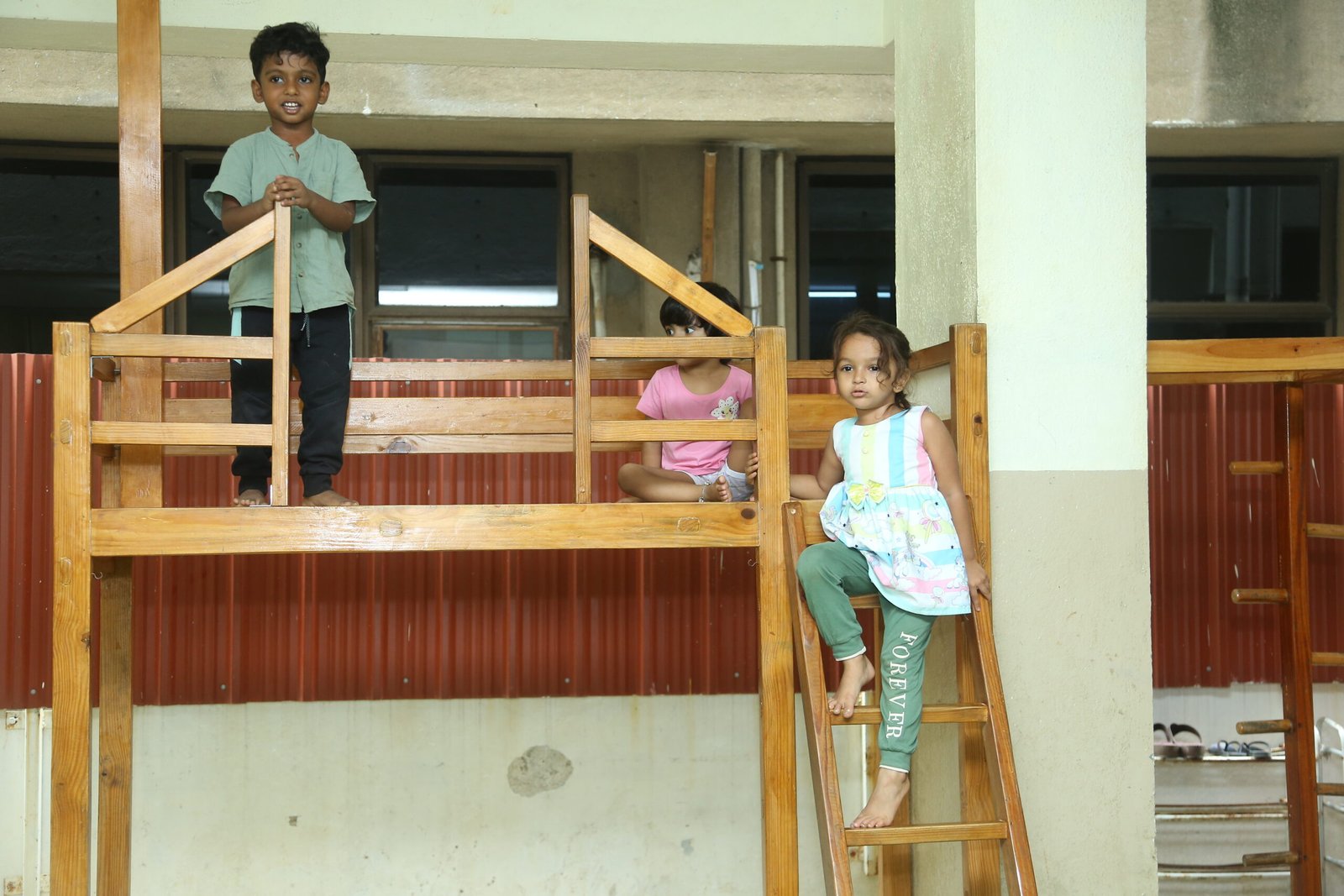
Why We Delay Formal Academics Until Age Seven
In today’s parenting culture, there’s an unspoken race: whose child can read first, write neatly at four, or master math problems in kindergarten? Parents worry that if their child doesn’t “start early,” they may fall behind. But research in child development and health consistently shows the opposite: delaying formal academics until around age seven supports healthier, happier and ultimately more successful learners.
At our school, we follow this wisdom not as a tradition but as it aligns with how children’s bodies, brains and emotions naturally develop. Let’s explore why.
The Developing Brain Needs Play, Not Pressure
Neuroscience tells us that during the first seven years, a child’s brain is still laying down the wiring for movement, coordination, balance and sensory processing. These are the “roots” of learning. When children climb trees, balance on logs, dance or build towers of blocks, they are actually strengthening neural pathways that will later support reading, writing and math.
For example:
- Crossing the monkey bars strengthens bilateral coordination — the same skill needed for crossing the midline when reading across a page.
- Hopping, skipping and rhythmic play support language fluency and math sense.
- Drawing large circles in the air or on paper builds pre-writing muscles before a pencil is even introduced.
If we rush to academics too soon, we risk building on shaky foundations. But when we honor the body’s timeline, academics later feel natural and effortless.
The Body’s Energy Is Busy Growing
From a medical perspective, the years up to seven are full of rapid physical growth. Energy is primarily directed toward building strong bones, muscles and organs. Asking children to sit still for long hours or focus on abstract concepts takes that life energy away from where it is most needed — their bodies.
That’s why young children thrive on running, jumping, rolling, baking, painting, gardening and imaginative play. These whole-body experiences keep their growth balanced and later, when the body is strong, the mind is free to learn with focus and stamina.
Emotional Health Before Academic Achievement
Under seven, children live through their feelings and imagination. They experience the world in pictures, stories and play. Imaginative play is not “just play” — it is how they process the world around them, try on roles, solve problems and build resilience.
When academics are pushed too soon, children can feel pressured or “not good enough,” creating stress at an age when their nervous systems are still delicate. This can lead to anxiety, behavioral challenges or even aversion to school.
Instead, when we tell them fairy tales, sing songs, act out little dramas and let them build castles out of cushions, we are feeding their emotional health. A child who feels safe, loved and capable enters academics with joy, not fear.
Movement and Play Are Medicine
Pediatricians often stress that healthy movement in childhood supports everything from posture and vision to digestion and sleep. Today’s children, surrounded by screens and technology, are moving far less than previous generations. Delaying academics gives them more time for outdoor play, running, climbing, and exploring.
Did you know?
- Children who spend more time outdoors show fewer signs of near-sightedness.
- Rhythmic games and songs enhance memory and attention span.
- Kneading dough or molding clay prepares hand muscles better than hours of worksheets.
- These experiences are not “extra” — they are the medicine that keeps young bodies and minds healthy.
Real-Life Experiences Build Real Intelligence
This generation of parents faces a unique challenge: information is everywhere but wisdom is harder to find. Children can “learn facts” on screens but true intelligence grows from lived experience.
Cooking a simple meal teaches math (measuring, counting), science (heat, transformation) and language (new words, sequencing). Caring for plants and animals fosters responsibility, observation and empathy. Helping at home develops perseverance and cooperation.
These practical experiences form a base for academic concepts to make sense later. A child who has baked bread will understand fractions far more deeply than one who only sees them in a workbook.
The Gift of Readiness
Something changes around age seven. You may notice your child suddenly curious about letters, asking what signs say, or trying to write their name. Their ability to concentrate lengthens and their fine motor skills (developed through years of play and handwork) are ready for writing and drawing with ease.
This is readiness — and when academics are introduced at this stage, children grasp them quickly and joyfully. They are not behind; they are fully prepared. In fact, research shows that children who start reading later often catch up within months and many surpass early readers in comprehension and love for learning.
A Gift for Life
Delaying academics until age seven is not about holding children back; it is about giving them a strong foundation. Just as a tree needs deep roots before it can grow tall, children need years of movement, play, and imagination before they are ready to take on structured learning.
When we wait, we are saying to our children: We trust your natural pace. We honor your growth. We believe in your future. And that message, carried in the heart, makes all the difference.
In Closing
Academic skills are important — but only when the child is ready. Before seven, what children need most is a childhood filled with play, movement, story, nature, and love. These experiences build not just good students, but whole human beings who are resilient, curious, and full of life.
By respecting this natural timeline, we are not giving less. We are giving more — the gift of a healthy, joyful start that lasts a lifetime.
Further Reading
- American Academy of Pediatrics – The Power of Play: A Pediatric Role in Enhancing Development in Young Children (2018)
https://publications.aap.org/pediatrics/article/142/3/e20182058/38649 - Center on the Developing Child, Harvard University – Key Concepts: Brain Architecture
https://developingchild.harvard.edu/key-concept/brain-architecture/ - National Research Council – From Neurons to Neighborhoods: The Science of Early Childhood Development (2000, NCBI)
https://www.ncbi.nlm.nih.gov/books/NBK225562/ - Nijhof, S. L., et al. – Play is a Key Element for Children’s Health and Development (2018, PubMed)
https://pubmed.ncbi.nlm.nih.gov/30273634/ - National Association for the Education of Young Children (NAEYC) – The Power of Playful Learning in the Early Childhood Setting (2022)
https://www.naeyc.org/resources/pubs/yc/summer2022/power-playful-learning