

Blog
- Early Childhood
- /
- The Pedagogy of Play in Early Childhood: A Waldorf Perspective
In the Early Years of Life, Play Is Learning
In the early years of life, play is not a diversion from learning—it is the learning itself. Within Waldorf education, play is understood as the child’s natural way of coming into relationship with the world. Rooted in the insights of Rudolf Steiner, this pedagogy honours the truth that young children learn most deeply not through instruction, but through imitation, imagination, and activity.
The Living Joy of Play
Rudolf Steiner reminds us in The Education of the Child in the Light of Anthroposophy:
“The joy of the child in and with his environment must be reckoned among the forces that build and mould the physical organs.”
When a child plays joyfully, this activity does far more than pass the time—it builds the very foundation of the body and soul. A stick becomes a horse, a cloth turns into a cape, a pinecone becomes a loaf of bread for a doll’s family. In these transformations, the child’s inner life shines forth, nurturing flexibility of thought, resilience, and creativity.
The Power of Imitation
Steiner described the young child as “one great sense organ.” In these tender years, children absorb the world around them and shape themselves in response. For this reason, the adults who care for them need not stand as instructors, but as models of meaningful, joy-filled activity.
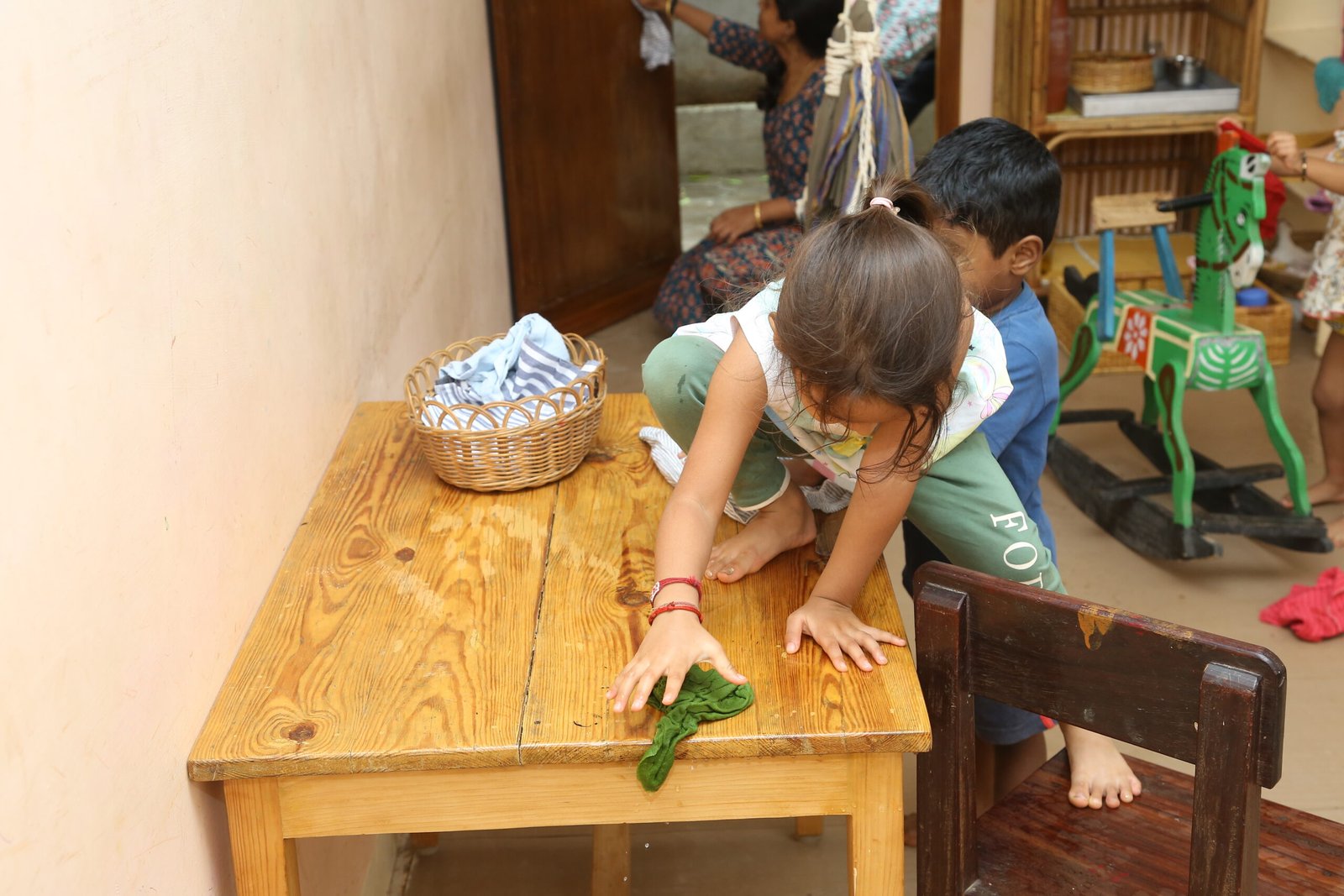
When the teacher kneads bread, tends to the garden, or sweeps the floor with care, the child’s whole being wishes to join in. Out of such imitation arises play—not random, but deeply purposeful, as the child unites imagination with action.
Play as the Child’s Work
In Waldorf early childhood, play is revered as the child’s most serious work. It is through play that children test their will, practice social life, and come to know the world. Elisa J. Sobo, in her research Play’s Relation to Health and Well-being in Preschool and Kindergarten, affirms what Steiner foresaw: that play nourishes not only thinking and feeling, but also the physical health and vitality of the young child.
The Gift of Rhythm
Within a Waldorf kindergarten, daily life moves in a gentle rhythm—breathing in and out between play and rest, activity and quiet. Storytelling, song, and circle time weave together with long stretches of free, unstructured play, both indoors with open-ended, natural materials and outdoors in the embrace of nature. This rhythm gives children a sense of security, while the freedom within it allows their inner life to blossom.
Protecting Childhood
Formal academics are lovingly held back until around the seventh year, for these early seasons of life are meant to be rich in movement, song, story, play, and the weaving of imagination. As Susan Howard reflects in The First Waldorf Kindergarten: The Beginnings of Our Waldorf Early Childhood Movement, Steiner’s vision was to protect the sacredness of childhood, nurturing it with love, imagination, and freedom.
Play as Education
In the Waldorf view, play and education are not separate—they are one. Through play, the child grows into wholeness, discovering joy, courage, creativity, and the seeds of lifelong learning.
🌸 Play is the song of childhood—the way the young soul learns to dance with the world.
References
- Steiner, R. (1907). The Education of the Child in the Light of Anthroposophy. Read online.
- Steiner, R. (1923). The Child’s Changing Consciousness and Waldorf Education. Read online at RS Archive.
- Sobo, E. J. (2014). Play’s Relation to Health and Well-being in Preschool and Kindergarten: A Waldorf (Steiner) Education Perspective. Journal of Ethnobiology and Ethnomedicine. Taylor & Francis Online.
- Howard, S. (2019). The First Waldorf Kindergarten: The Beginnings of Our Waldorf Early Childhood Movement. Waldorf Today.